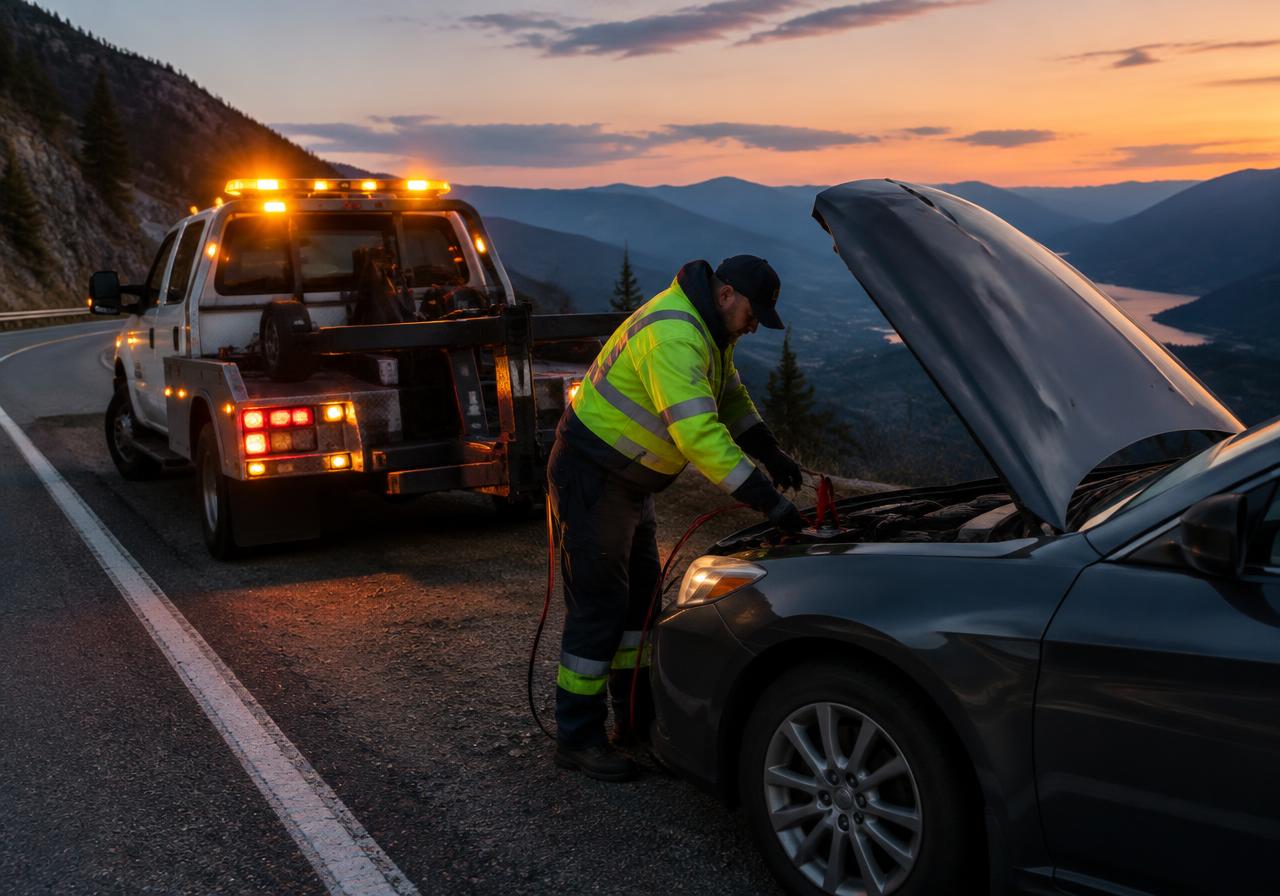
Roadside problems feel urgent because they happen in exposed, unfamiliar places. A calm location check and a direct call to dispatch can help us understand whether you need roadside service or a tow.
On I-90 or a busy road
Pull as far from traffic as the vehicle safely allows, switch on hazard lights, and stay behind a barrier when one is available. If the vehicle is in a travel lane, there is an injury, or you smell fuel or see smoke, call 911 before roadside dispatch.
Give your direction of travel
Share the nearest exit or mile marker
Describe your vehicle color and exact position
Battery and jump-start help
A no-start can come from a discharged battery, loose connection, starter problem, or another electrical issue. Tell dispatch whether lights come on, whether you hear clicking, and whether the engine turns over.
If the vehicle starts but warning lights remain or it stalls again, towing to a repair location may be safer than continuing the trip.
Flat tires and lockouts
For a tire change, confirm that a usable spare and wheel-lock key are in the vehicle. If the shoulder is narrow, the ground is unstable, or damage extends beyond the tire, a tow may be the safer solution.
For a lockout, explain the vehicle type and whether a child, vulnerable person, or pet is inside. In an immediate safety emergency, contact 911.
Fuel delivery and rural locations
Tell dispatch the fuel type before service is arranged. In rural areas around the Silver Valley, Coeur d'Alene, Post Falls, or Spokane, a dropped map pin, cross street, business name, or visible landmark can help identify your location.
Never walk along an interstate shoulder to find fuel. Stay in a protected place and call for help.